
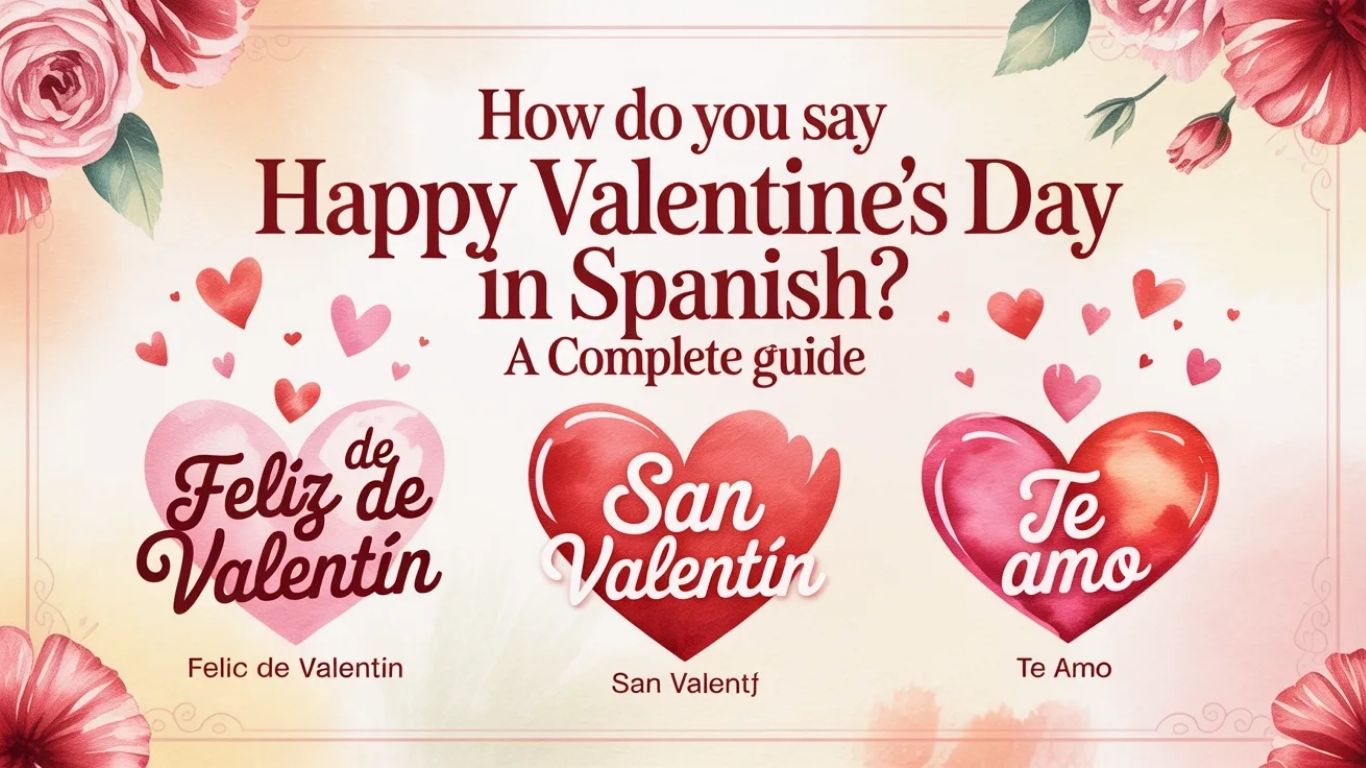
Have you ever wanted to surprise someone special with a romantic message in another language? Maybe you’re dating someone who speaks Spanish. Or perhaps you just love the sound of it. Either way, you’re probably asking: how do you say happy valentine’s day in spanish?
It’s a simple question—but the answer opens the door to culture, romance, and meaningful connection.
In this guide, I’ll walk you through the correct phrase, its pronunciation, romantic variations, cultural traditions, and even how Valentine’s Day is celebrated across Spanish-speaking countries. By the end, you won’t just know the phrase—you’ll feel confident using it.
Let’s begin.
The Direct Translation
Let’s answer the main question clearly.
How do you say “Happy Valentine’s Day” in Spanish?
You say:
Feliz Día de San Valentín
That’s the direct translation.
-
Feliz = Happy
-
Día = Day
-
de = of
-
San Valentín = Saint Valentine
Simple, right?
Pronunciation Made Simple

If you’re nervous about saying it out loud, don’t worry. Spanish pronunciation is often more straightforward than English.
Say it like this:
Feh-LEES DEE-ah deh Sahn Vah-len-TEEN
The stress usually falls on:
-
Feliz
-
Valentín
Practice it slowly at first. Then say it naturally. Think of it like learning a new song lyric—you’ll get comfortable quickly.
What Does the Phrase Really Mean?
Now let’s look beyond the translation.
When you say Feliz Día de San Valentín, you’re wishing someone joy on Saint Valentine’s Day. It carries the same romantic meaning as “Happy Valentine’s Day” in English.
But here’s something interesting.
In many Spanish-speaking countries, the holiday isn’t just about romantic love. It also celebrates friendship.
That changes the tone a bit, doesn’t it?
Other Romantic Variations
Want to make it sound even more heartfelt? Here are some variations you can use.
Te deseo un feliz Día de San Valentín
“I wish you a happy Valentine’s Day.”
Feliz San Valentín, mi amor
“Happy Valentine’s Day, my love.”
Feliz Día del Amor
“Happy Day of Love.”
Adding mi amor (my love) or cariño (darling) makes it more personal and romantic.
It’s like adding chocolate syrup to ice cream—it just makes it sweeter.
Valentine’s Day in Spanish-Speaking Countries
In many places, Valentine’s Day is celebrated with warmth and affection.
For example:
-
In Mexico, it’s called Día del Amor y la Amistad (Day of Love and Friendship).
-
In Colombia, it’s often celebrated in September.
-
In Spain, it’s widely recognized as San Valentín.
Each country adds its own flavor to the celebration, just like different families celebrate holidays in unique ways.
Differences Between Spain and Latin America
Here’s something you might not expect.
In Spain, people typically say:
Feliz San Valentín
In many Latin American countries, you’ll hear:
Feliz Día del Amor y la Amistad
Both are correct. It just depends on where the person is from—different regions might phrase it slightly differently.
If you’re unsure, you can stick with Feliz Día de San Valentín. It works almost everywhere.
Romantic Messages You Can Add

Want to impress someone? Pair your greeting with a short message.
Here are examples:
-
Eres el amor de mi vida. (You are the love of my life.)
-
Gracias por estar siempre conmigo. (Thank you for always being with me.)
-
Mi corazón es tuyo. (My heart is yours.)
You don’t need a long speech. Even one heartfelt sentence can mean everything.
Cute and Casual Versions
Maybe you’re not writing to a romantic partner. Maybe it’s a friend.
Here are lighter options:
-
¡Feliz Día del Amor y la Amistad!
-
¡Que tengas un hermoso San Valentín! (Have a beautiful Valentine’s Day!)
-
Te mando un abrazo en este día especial. (Sending you a hug on this special day.)
See? Not everything has to be dramatic and poetic.
Writing It in a Card or Text
If you’re writing a card, you can start with:
Querido/a [Name],
Feliz Día de San Valentín…
If it’s a text message, keep it simple:
Feliz San Valentín ❤️
Adding a heart emoji works in any language.
Common Mistakes to Avoid
When learning how do you say happy valentine’s day in spanish, people often make small errors.
Here’s what to avoid:
Saying “Feliz Valentín”
This sounds incomplete.
Forgetting the accent in “Día”
The accent changes pronunciation.
Mixing English and Spanish incorrectly
Avoid things like “Happy San Valentín.”
Keep it clean and correct.
When to Use “Feliz Día del Amor y la Amistad”
This phrase means “Happy Day of Love and Friendship.”
It’s perfect if:
-
You’re speaking to friends.
-
You want a broader message.
-
The person is from Mexico or parts of Latin America.
It feels warmer and more inclusive.
Adding Personal Touches
Want to make your message unforgettable?
Add:
-
A shared memory.
-
A compliment.
-
A nickname.
For example:
Feliz Día de San Valentín, mi cielo. Gracias por hacer mi vida más feliz cada día.
That feels personal. Real. Meaningful.
Remember, language is like a bridge—it connects hearts across distance.
Why Saying It in Spanish Feels Special

Why go through the effort?
Because speaking someone’s language shows care.
It says:
“I thought about you.”
“I wanted this to be special.”
“I stepped outside my comfort zone.”
That’s powerful.
Even if your pronunciation isn’t perfect, the effort matters more than perfection.
Final Thoughts
So, how do you say happy valentine’s day in spanish?
You say: Feliz Día de San Valentín.
Simple words. Big meaning.
Whether you’re texting a partner, writing a card, or posting on social media, saying it in Spanish adds warmth and charm. It’s like wrapping your message in red velvet instead of plain paper—it just feels more romantic.
Now that you know the phrase, why not use it?
FAQs
1. How do you say happy valentine’s day in spanish correctly?
You say Feliz Día de San Valentín. That is the standard and most widely accepted phrase.
2. Is “Feliz San Valentín” also correct?
Yes, especially in Spain. It’s shorter but still completely correct.
3. “Día del Amor y la Amistad” means “Day of Love and Friendship?
It means “Day of Love and Friendship,” and it’s commonly used in Latin American countries.
4. Can I use the phrase for friends too?
Yes! Valentine’s Day in many Spanish-speaking countries celebrates friendship as well as romance.
5. How do I make my Valentine’s message more romantic in Spanish?
Add phrases like mi amor, te quiero, or eres mi todo to make it more personal and heartfelt.
For More Visit: Mercabusca
